

Core Charting
Input Medical Context
Input Medical Context helps providers steer AI output by supplying key clinical details, preferences, and constraints before note generation.
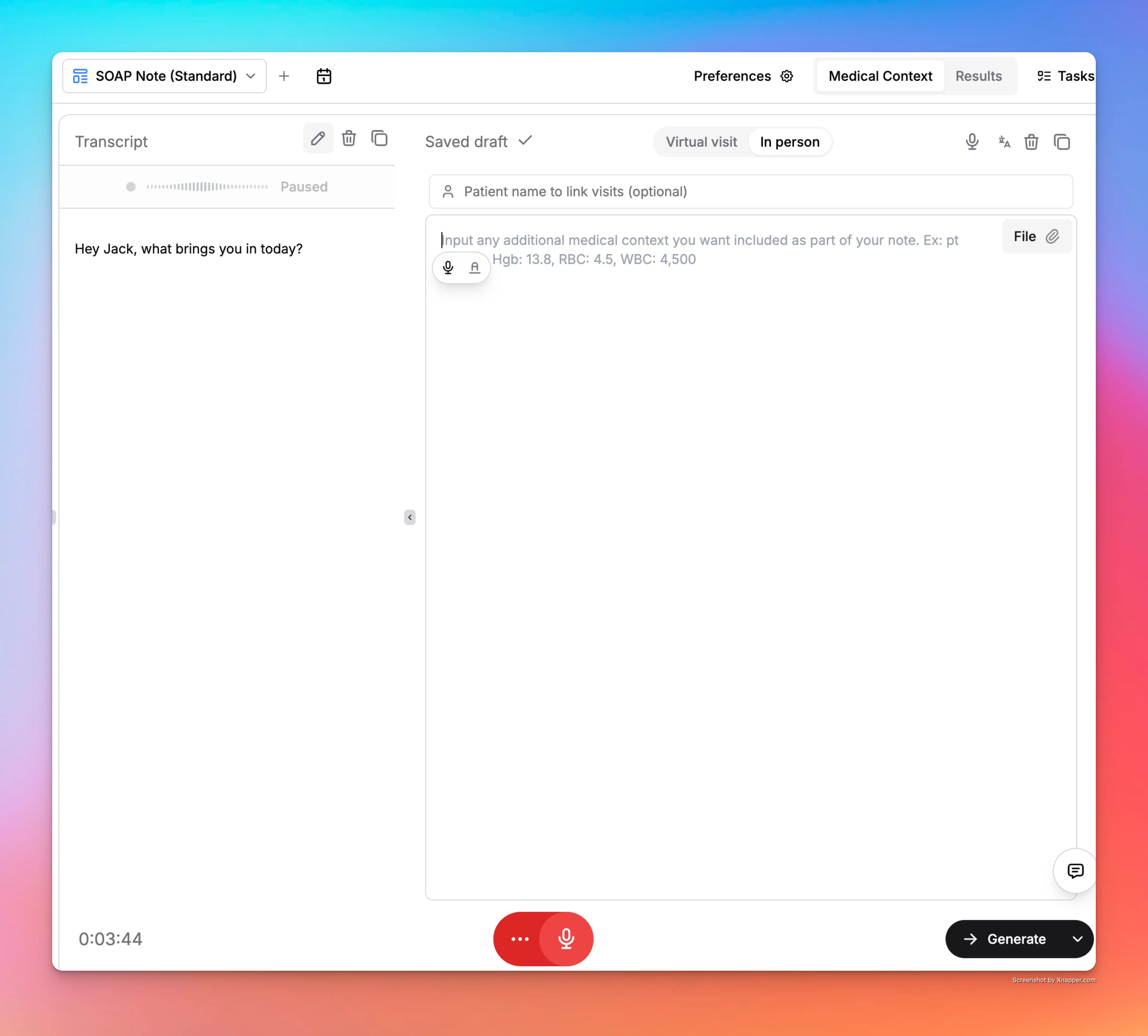
What does Input Medical Context do for clinical charting?
Input Medical Context improves note quality by giving the AI important background before generation. This reduces generic output and increases alignment with specialty workflows and documentation expectations.
How does Input Medical Context fit into your workflow?
Clinicians add essential context such as visit focus, conditions, or preferred structure. Scribeberry then uses that context to shape transcript interpretation and output formatting.
- Enter relevant patient or visit context before generating notes.
- Specify structure preferences and critical details to prioritize.
- Generate documentation informed by your context input.
- Review output and reuse context patterns for future encounters.
When should clinicians use Input Medical Context?
This feature is especially valuable for complex cases where brief context dramatically improves precision and consistency.
- Specialty visits requiring strict documentation structure.
- Complex chronic disease follow-ups with nuanced context.
- Providers aiming to standardize notes across a care team.
Frequently asked questions about Input Medical Context
The FAQs below clarify when and how to provide context effectively.
Add details that influence note structure or interpretation, such as clinical focus, preferences, and key patient factors.
Yes. Better upfront context typically reduces downstream edits and improves first-pass note quality.
Yes. Teams can apply repeatable context patterns to keep documentation consistent.
Ready to use Input Medical Context in your clinic?
Scribeberry supports 30,000+ providers with AI-first documentation workflows and is built for practical day-to-day charting.
More core charting

