

Berry vs. other AI healthcare agents: a clinician’s guide

Quick answer
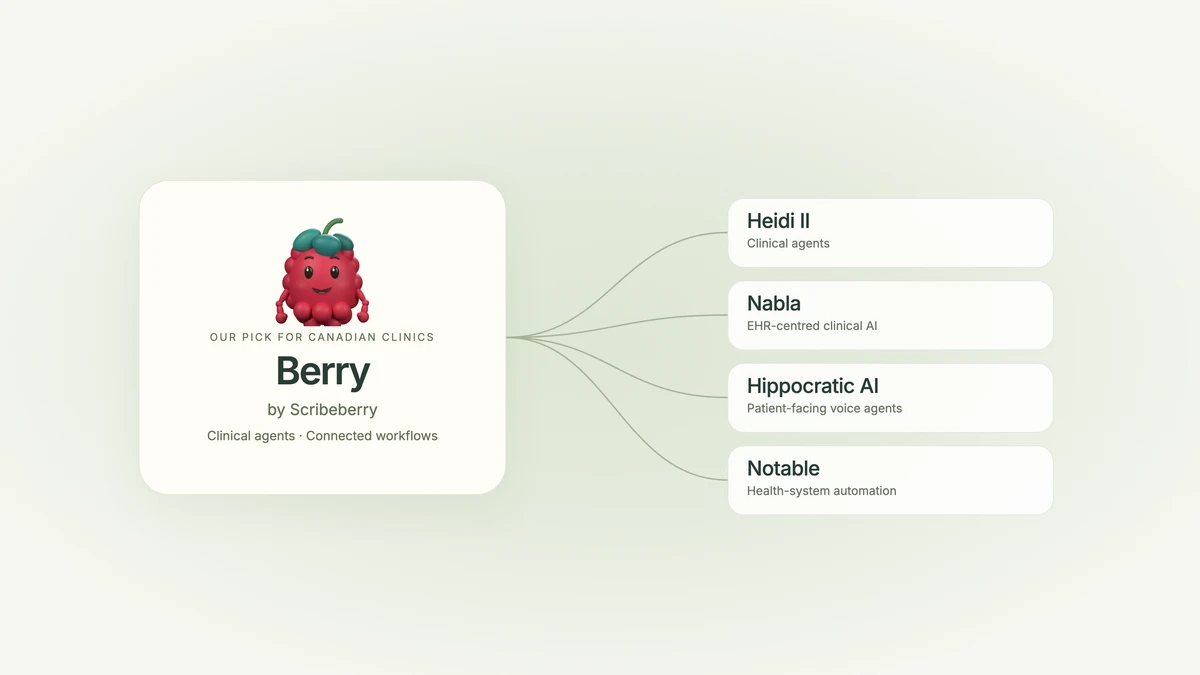
Berry by Scribeberry is our pick for Canadian clinics looking for clinical agents, connected workflows, scheduled tasks and autonomous patient intakes in one workspace. Its growing integrations connect pre-charting, forms, referrals and follow-ups to the tools each provider uses. Heidi II also offers clinical agents and scheduled routines; Nabla emphasizes EHR-connected documentation and coding; Hippocratic AI focuses on patient-facing voice; Notable on health-system operations.
A referral sitting in drafts, a call queue that never clears and a note waiting to be coded are all healthcare administration. They are also three different reasons to buy software.
That’s why “Which healthcare agent is best?” needs a second question: best for whose work?
For a Canadian clinician looking for agents that can carry clinical work through, our recommendation is Berry by Scribeberry. Pre-charting, forms, referral faxes, intakes and follow-ups belong together. Berry brings them into one workspace, with connected tools, scheduled tasks and Canadian patient data staying in Canada.
We build Berry, so yes, our recommendation is biased. This is a workflow-based comparison using the vendors’ product materials and our own product knowledge, reviewed on September 30, 2026. Take it as a starting point, then try the same everyday job in the products you’re considering.
The shortlist at a glance
| Platform | Product focus | Where we’d start |
|---|---|---|
 Berryby ScribeberryOur clinic pick Berryby ScribeberryOur clinic pick | Clinical agents, growing connectors, scheduled tasks and autonomous email/text intakes, alongside pre-charting, forms and referrals. | Connected clinical work and patient follow-through, shaped around a Canadian provider’s workflow. |
| Heidi II | Clinical agents, pre-charting, research and scheduled routines. | Clinical work across integrated systems and legacy portals. |
| Nabla | Ambient notes, dictation, coding and EHR integration. | Documentation and clinical AI embedded in an existing EHR. |
| Hippocratic AI | Patient-facing voice agents and coordinated outreach. | Patient conversations and outreach across a population. |
| Notable | Patient access, revenue cycle and care operations. | Automation across health-system departments and workqueues. |
There is overlap here: clinical agents, integrations and automation appear across several products. The useful question is how those capabilities fit the person doing the work in your clinic.
1. Berry by Scribeberry: our pick for Canadian clinical work
Berry puts clinical agents to work inside Scribeberry, using patient context and connected tools to prepare for care and carry the next steps through.
You can move from the note to a form, referral or follow-up without turning the encounter into a new project somewhere else. A request can cover several related jobs, with the clinical details available for review as Berry works through them.
Berry also supports scheduled tasks for recurring work. Its connectors and integrations are continually expanding around the individual ways healthcare providers work, so the workflow can reach the services your practice relies on. Connected Accuro and Enterprise Google Calendar and Gmail are examples of that approach.
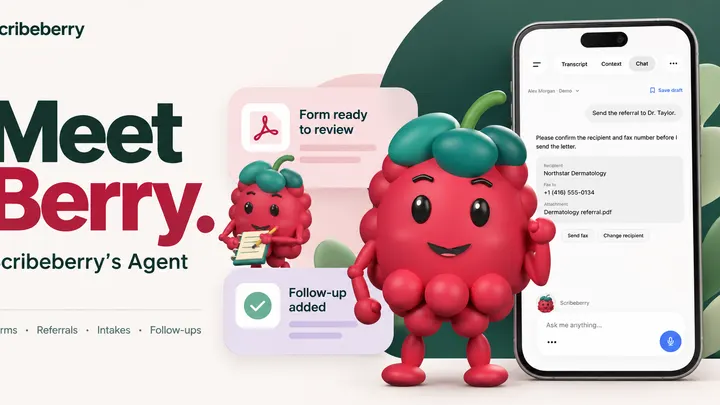
Its intake agents can autonomously send forms to patients by email or text through your clinic’s configured intake workflow. You can also ask Berry to send an intake directly from a visit, as in the example below.
The workflow we would put in front of a Canadian family practice is straightforward:
- Prepare the day from a schedule and available chart context.
- Draft the clinical note and use that context to fill the form.
- Review the referral letter and fax destination.
- Send the configured intake and save the follow-up with the visit.
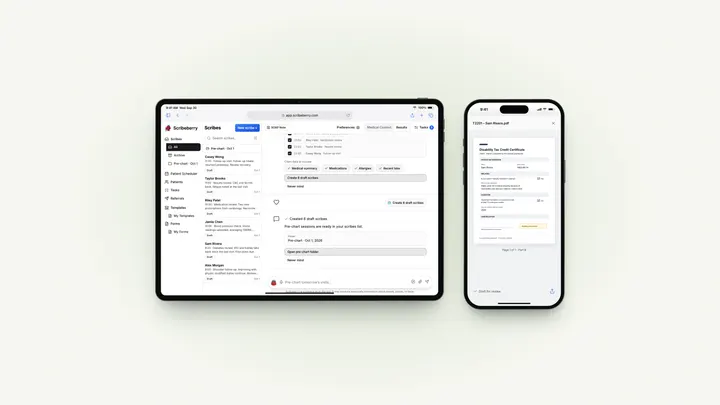
The Canadian details matter: T2201 and provincial forms, referral faxing, provincial fee-code lookup and connected Accuro workflows. A clinic should be able to recognize its actual paperwork in the demo.
The appeal is having clinical agents, patient intake and recurring work in one familiar workspace, with integrations that grow around the practice.
2. Heidi II: the closest clinician-agent comparison
Heidi’s September 30, 2026 launch post, “Heidi II is here”, describes agents that carry clinical and administrative tasks across integrated systems and legacy portals.
Its examples include pre-charting rounds, finding pathology results, completing referral forms and drafting handover letters. Saved tasks become scheduled Routines. The release also introduces an updated Home, Memory that learns practice preferences, and research tools drawing on full-text journal articles.
The post says rollout begins September 30 in English, with more languages to follow. It lists the EU and UK as unavailable at launch, with Asia and the Middle East coming later.
Berry and Heidi both support clinical agents, connected workflows and scheduled work. For a Canadian practice choosing between them, bring your actual form, referral destination and recurring intake workflow. Look at the finished output, the connections you need and the data environment. That is a more useful comparison than the name each product gives its automation.
3. Nabla: a strong EHR-centred clinical AI option
Nabla’s current platform emphasizes ambient documentation, clinical dictation, coding and integration with EHRs. Its coding materials describe E/M and ICD-10 suggestions grounded in the documentation, with the clinician making the final decision.
That is a meaningful fit for an organization whose main objective is to put documentation support directly into its existing EHR environment.
For a practice evaluating the whole clinic workflow, we would also look at what happens after the note: form completion, referral delivery, intake and follow-up. Berry keeps those steps connected to the encounter and can use scheduled tasks for work that repeats.
Here is one of the smallest, most common examples: create a follow-up, change its due date and keep it linked to the patient.
4. Hippocratic AI: patient-facing conversations at scale
Hippocratic AI is built around clinical voice agents that talk with patients. Its published examples include appointment scheduling, intake history, screening outreach and post-discharge support. Its orchestrators coordinate agents around broader healthcare outcomes.
If the problem is reaching a patient population by phone, that is a relevant place to look.
Berry covers patient-facing work too: its intake agents can autonomously send forms by email or text, alongside the clinical agents handling chart preparation, forms, referrals and follow-ups. The distinction to explore is the channel and the job: a voice conversation with a patient, a form completed before the appointment, or the clinical work that follows it.
5. Notable: automation across a health system
Notable describes agents for patient access, revenue cycle and care operations. Its examples include fax intake, referral processing, scheduling, registration and contact-centre work. Its platform materials describe connected agents and tools for configuring workflows across systems.
Its materials focus on operational automation spanning teams and departmental workqueues. Berry’s entry point is the provider’s clinical workflow, extended through connectors, scheduled tasks and intake agents. If your organization is redesigning access or revenue-cycle operations across departments, include those requirements in the evaluation too.
Compare the handoffs, not just the answer
Here’s the short demo we would ask any clinician-facing agent to perform:
“Use this visit to prepare a referral, show me where it’s going, and set up the follow-up.”
Watch what happens after the first draft. Can you change the recipient? Is the task attached to the visit? Can you tell whether the fax was queued or delivered? Does the work remain easy to find on your phone?
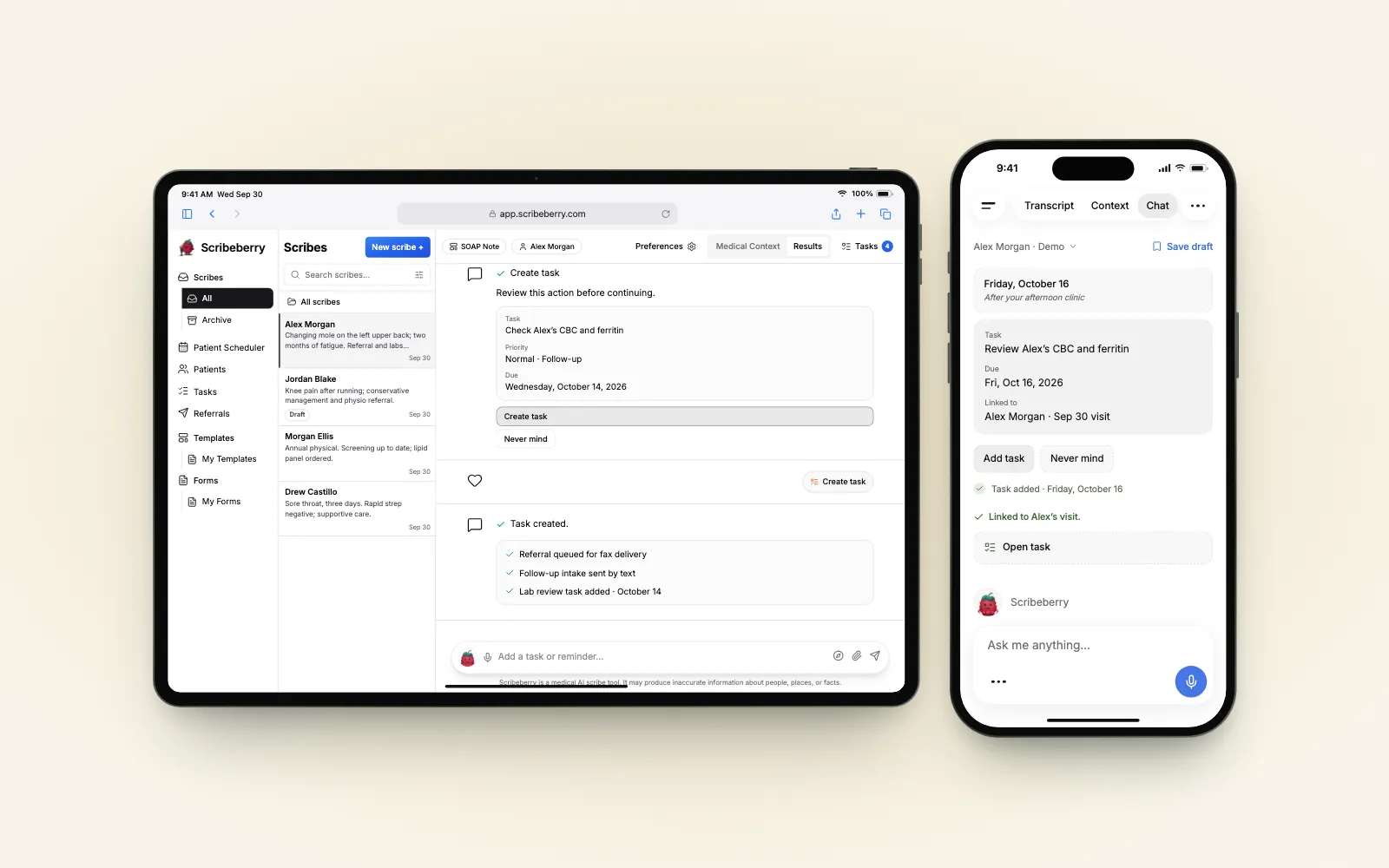
This is the strongest case for Berry. The finished work is tangible: a PDF to review, a fax submission to track, an intake link sent, a task with a date. You can evaluate those results against your own day.
What about integrations, plans and Canadian data?
These details belong in the comparison because they change what your clinic can do:
| Requirement | Berry’s fit |
|---|---|
| Canadian forms and referrals | Forms from your library, draft PDFs for review and referral faxing. |
| Connectors and integrations | A growing set of connections shaped around individual providers’ workflows and the services their practices use. |
| Direct chart and schedule access | Connected Accuro workflows; pre-charting can also start from uploaded or pasted schedules. |
| Scheduled tasks | Schedule recurring work so it can run without a fresh request each time. |
| Patient intake agents | Autonomous form delivery by email or text, using the intake add-on and configured messaging. |
| Google Calendar and Gmail | Enterprise plans, with connected accounts and review of the proposed actions. |
| Canadian patient data | Stored and processed in Canada, encrypted end to end. US infrastructure serves US and international customers. |
| Phone and web access | Scribeberry on iPhone, Android and the web. |
When comparing quotes, use the configuration you need. A basic documentation plan, an intake-enabled clinic and an Enterprise deployment with connected calendar tools are different purchases.
We don’t infer another vendor’s regional hosting or contract terms from its product category. For Berry, the Canadian data commitment is part of the product; see our security page.
Our recommendation
Start with Berry if you’re a Canadian clinician looking for clinical agents that fit the way you practise. Its combination of clinical context, growing integrations, scheduled work, autonomous intakes and Canadian data handling is why we built it—and why it is our pick.
Try it for yourself with one ordinary clinic workflow. The disability form you dread, the intake you send every morning or the referral waiting to go out will tell you more than a perfect sample note.
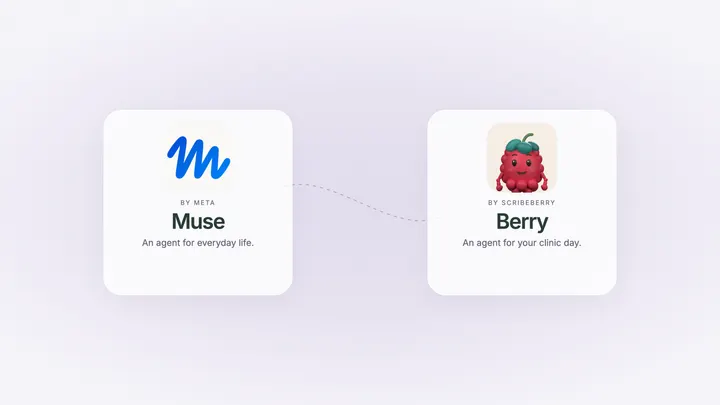
See how doctors use Berry, explore the Muse-for-healthcare idea, or meet Berry here.
Frequently asked questions
Which AI healthcare agent should a Canadian clinic consider first?
Our recommendation is Berry by Scribeberry for clinical agents that bring together pre-charting, Canadian forms, referral faxes, autonomous patient intakes and scheduled tasks. Connectors and integrations are continually expanding around providers’ workflows. Canadian customer patient data stays in Canada with end-to-end encryption.
How is Berry different from Heidi II?
Both offer clinical agents, connected workflows and scheduled work. Heidi’s September 30, 2026 post describes Agents, Routines, Memory and research tools. Berry brings clinical agents, scheduled tasks and autonomous email/text intake together with Canadian forms, referral faxing and a growing set of connectors inside Scribeberry. Try the same clinic workflow in both to see which fits your practice.
Can Berry run scheduled tasks and send patient intakes automatically?
Yes. Berry supports scheduled tasks for recurring work, and its intake agents can autonomously send forms to patients by email or text through your clinic’s configured intake workflow. Intake delivery requires the intake add-on and configured messaging.
Is Nabla only an AI scribe?
No. Nabla’s current product materials describe ambient documentation, dictation, coding and EHR-connected clinical workflows. It is worth evaluating for an EHR-centred deployment. Compare the exact forms, referral delivery and follow-up workflow your clinic needs rather than assuming every clinical AI product does the same work.
How do Berry and patient-facing voice agents differ?
Berry’s clinical agents work with patient context and connected tools, and its intake agents can reach patients autonomously by email or text. Hippocratic AI’s public materials emphasize voice conversations with patients and orchestrated outreach. There is overlap in intake and follow-up; the communication channel and clinic workflow are useful points of comparison.
Are Google Calendar and Gmail included with every Berry plan?
No. Connected Google Calendar and Gmail workflows are available on Enterprise plans. Sending patient intakes requires the intake add-on and configured delivery. Include those requirements when comparing plans or requesting a demo.
Sources
- Scribeberry: Berry product overview
- Scribeberry: Security
- Heidi: Heidi II is here (September 30, 2026)
- Nabla: Clinical AI, documentation, dictation and coding
- Hippocratic AI: Healthcare agents and orchestrators
- Notable: AI-powered patient access
- Notable: How AI agents work together across a platform