

What is Meta’s Muse? And why we call Berry ‘Muse for healthcare’

Quick answer
Muse is Meta’s personal AI agent, launched in September 2026. It uses a browser and connected apps to carry out tasks such as planning travel and preparing email. Berry brings the agent idea to healthcare: working from the visit to prepare forms, referrals, intakes and follow-ups inside Scribeberry. ‘Muse for healthcare’ describes the experience, not a Meta product or partnership.
“Can you take care of it?” is a different request from “Can you tell me how?”
That’s the appeal of Muse, Meta’s new personal AI agent. You give it something to do. It works with the tools and accounts you’ve connected, and comes back when it has a result or needs your approval.
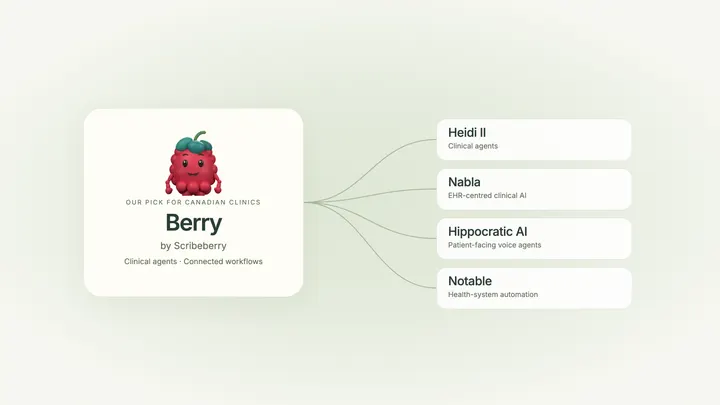
We get a similar question about Berry: is it another chatbot inside a medical scribe? The shortest answer is that Berry is Muse for healthcare—the idea of asking an agent to do the work, applied to the work around a patient visit.
Here’s what that comparison means, starting with Muse itself.
What is Muse?
Meta introduced Muse on September 8, 2026 as a personal AI agent. According to its launch announcement, Muse can open a browser, fill out forms, help with travel, prepare email and work toward longer-term goals.
It can keep working after you close the app and return when something changes or it needs permission. Meta describes sensitive actions, including sending an email or making a purchase, as approval points.
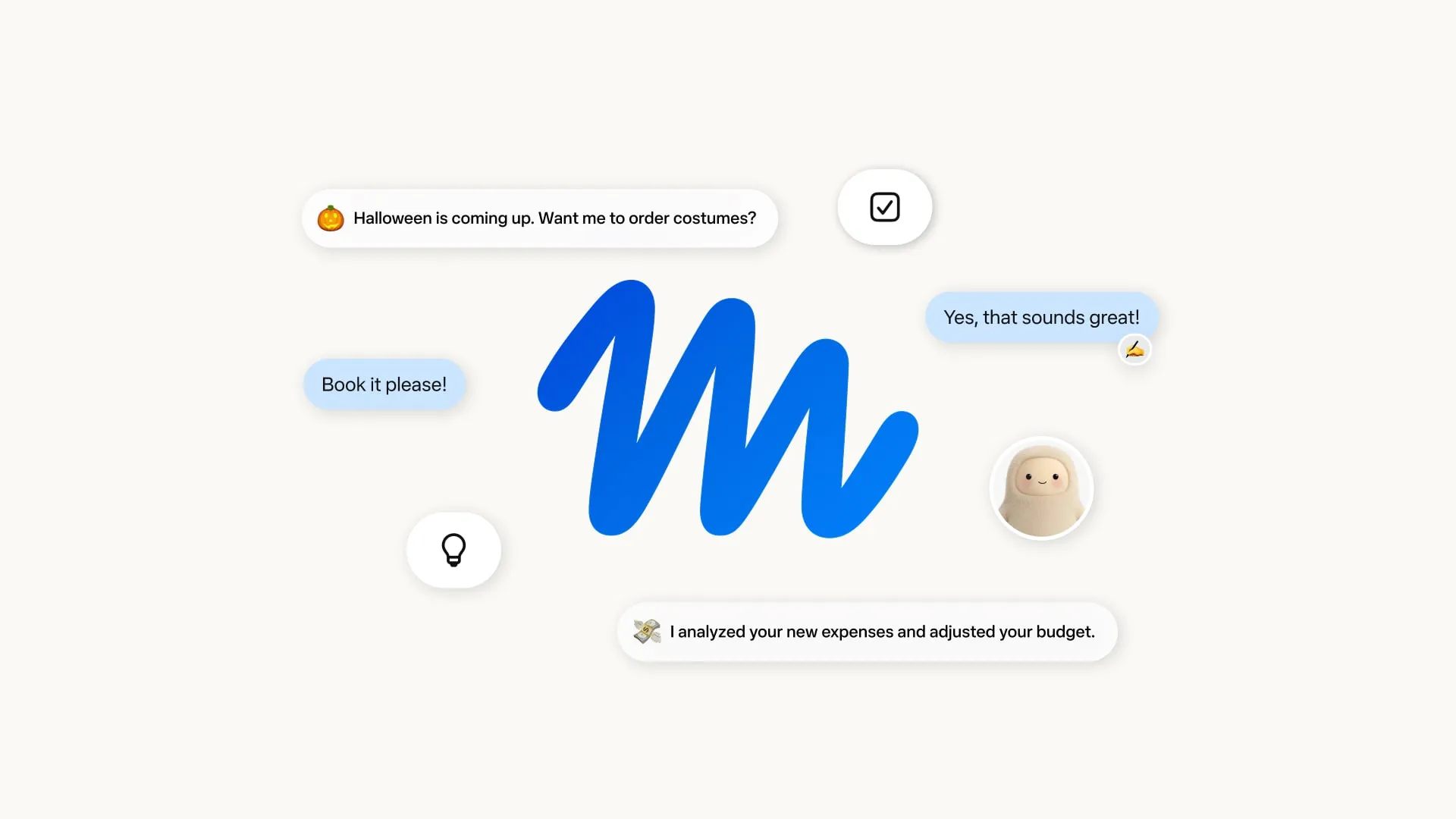
Mark Zuckerberg described the product this way at launch:
Introducing @Muse, the personal agent that understands your goals and works 24/7 to get things done for you. Your Muse gets its own private computer in the cloud to do work for you. We've built new technology so the Muse Secure VM keeps your content safe. We want everyone to have access to personal superintelligence, so we're providing Muse for free for up to 100 million tokens per week.
— Mark Zuckerberg (@zuck) on Threads, September 8, 2026
The launch materials describe access through the Muse app, the web and WhatsApp, beginning with a US rollout. Availability and plans can change; Meta’s announcement is the source for those details.
How does Muse actually work?
There are a few pieces behind the chat window:
- A model: Meta describes Muse as powered by Muse Spark. Muse is the agent product; Muse Spark is the model family underneath it.
- A working environment: Muse runs in a dedicated cloud computer called Muse Secure VM, with its own browser.
- Connections: you choose the services it can access and how much permission it gets.
- Memory and continuity: it can remember relevant preferences and keep working on longer tasks.
- Controls: Meta describes a separate Sentinel agent, approval checks and an audit trail.
Those pieces let a request turn into work across several steps. “Help plan the trip” can involve more than producing an itinerary in a chat bubble.
Introducing Muse, a personal agent that gets things done for you, powered by Muse Spark 1.3. Get an inside look at how we built Muse and what it can do for you:
— AI at Meta (@AIatMeta) September 8, 2026
What would that feel like in a clinic?
Think about the sentence at the end of a consultation:
“I’ll refer you, send you the follow-up questions, and check those results in two weeks.”
That sentence describes three jobs. It also leaves a surprising amount of clicking for later.
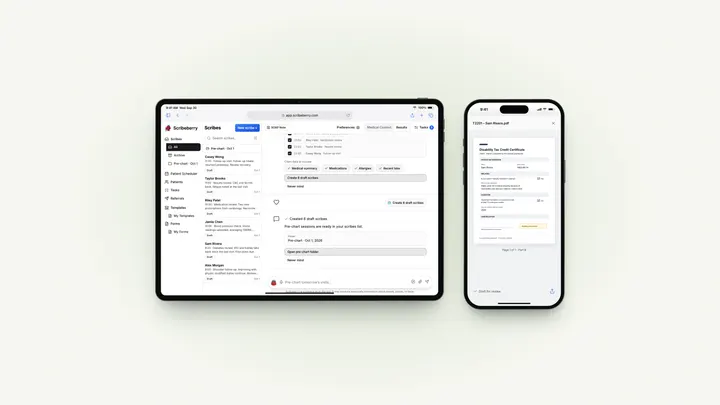
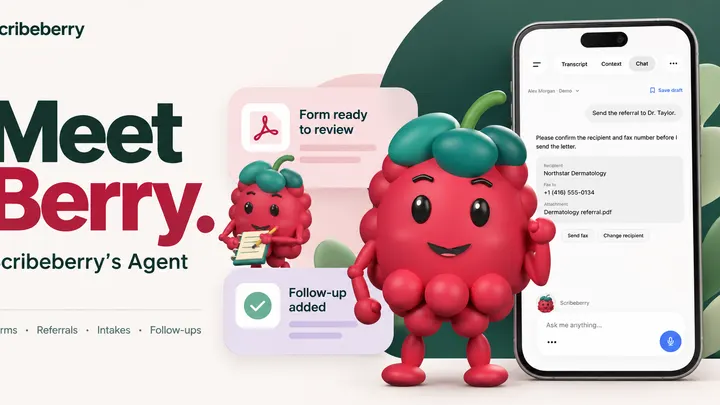
Berry takes that kind of request inside Scribeberry. It can work from the visit, your note and the relevant connected chart information. The output might be a filled PDF, a referral ready to fax, an intake link or a task with the patient attached.
The distinction becomes obvious with a form. Advice about completing a Disability Tax Credit application can be helpful. A draft of the actual form, filled from the available clinical context and ready for you to review, moves the job forward.
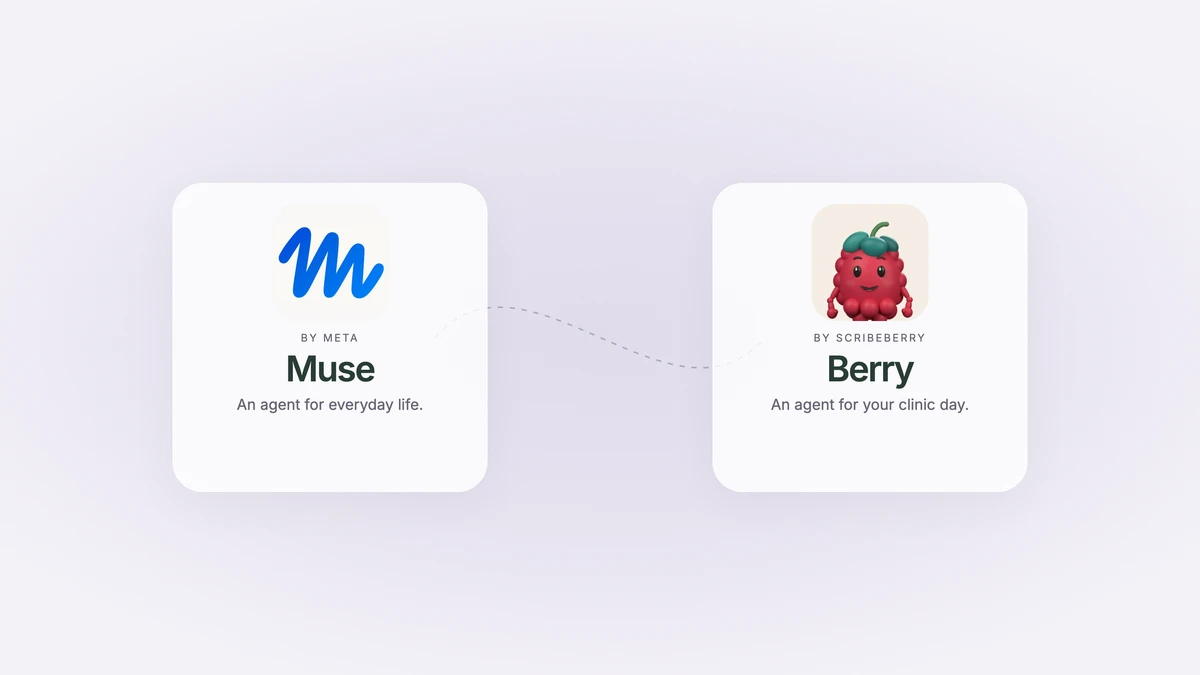
Muse for everyday life. Berry for clinical work.
The resemblance is in how you ask: say what needs doing, review the important details, and let the agent use the tools.
The context is different. Berry starts with a clinical encounter and the paperwork around it. Canadian forms, referral faxing, patient-linked follow-ups and Accuro chart access are part of that job.
 Muse Muse |  Berry Berry | |
|---|---|---|
| Made by | Meta | Scribeberry |
| Built for | Everyday life: plans, shopping, travel, email | Clinical work: charts, forms, referrals, follow-ups |
| What it does | Browses, fills out forms, negotiates, sends email | Pre-charts, fills forms, faxes referrals, sends intakes, adds tasks |
| Works from | Your goals, accounts and connected apps | The visit, your notes, forms and connected Accuro chart |
| Connected tools | Personal services, with access you choose | Clinical workflows; Google Calendar and Gmail on Enterprise |
| Review points | Sensitive actions such as email and purchases | Referral destinations, intake delivery and follow-up details |
| Where | Muse app, web and WhatsApp; launched in the US | Scribeberry on the web, iPhone and Android |
Scribeberry is an independent Canadian company. Berry isn’t a version of Muse, and this comparison doesn’t imply a shared model, architecture or Meta partnership. It’s a useful way to describe an experience that can otherwise sound more complicated than it is.
One request can cross several workflows
“Fax Alex’s referral, text his intake, and remind me about his labs in two weeks.”
Berry can work through the request as related jobs. The clinician reviews the referral and destination, approves the intake delivery and confirms the follow-up task.
Notice what counts as a result: the fax is queued, the intake link is sent, and the task is created. Those are different states. None means the specialist has seen the patient or the patient has completed the intake.
That is why showing the outcome of each step matters more than a cheerful “Done.” You need to know what happened and what is still waiting on someone else.
The demo recreates the web app with a fictional patient and condensed timing. Intake delivery requires your clinic’s intake add-on and configured messaging.
Yes, the calendar can be part of it
Some clinic work sits outside the patient chart. On Enterprise plans, Berry’s Google Calendar and Gmail connections can handle requests like:
“Block Friday 1–3 for charting and email the front desk.”
The event and the message are prepared for review before the actions run. This example is clinic administration, so there’s no patient information in the calendar entry or email.
It’s an especially clear connection to the Muse idea: the assistant helps you work across tools, instead of leaving you with instructions to carry out yourself.
What changes when the work is healthcare?
A patient chart brings responsibilities that a travel plan doesn’t. The result has to stay connected to the right patient, the clinician has to review the clinical content, and the data has to be handled in the right environment.
For Scribeberry’s Canadian customers, patient data is stored and processed in Canada and encrypted end to end. US infrastructure serves US and international customers. You can read more on our security page.
Berry is there to help with the work around care. You remain the person deciding what belongs in the form, why the referral is needed and what follow-up the patient should receive.
The point is a lighter clinic day
Muse is making a familiar idea easier to picture: software that can take a request and carry it through. Berry brings that experience into Scribeberry, where the visit and the next steps already belong together.
If you want the practical version, start with how doctors use Berry across a clinic day. If you’re choosing a platform, see Berry compared with other AI healthcare agents.
Or open the Berry overview and pick the first job you’d hand over.
Frequently asked questions
What is Meta’s Muse AI agent?
Muse is Meta’s personal AI agent, introduced on September 8, 2026. It can use a browser and connected services to carry out everyday tasks, work toward longer-term goals, and ask for approval before sensitive actions such as sending email or making purchases.
Is Muse the same as Muse Spark?
No. Muse is the personal-agent product. Muse Spark is Meta’s model family; Meta’s launch materials describe Muse as powered by Muse Spark. The agent adds tools, connected services, memory and a working environment around the model.
Is Berry made by Meta?
No. Berry is made by Scribeberry, a Canadian healthcare technology company. Calling Berry ‘Muse for healthcare’ is a way to explain its task-oriented experience. Scribeberry is not affiliated with Meta, and this is not a claim that Berry runs on Muse.
What does Berry do that is specific to healthcare?
Berry works with visit context, clinical notes, forms, referral destinations, patient intakes and follow-up tasks. It supports Canadian paperwork and connected Accuro chart workflows. Google Calendar and Gmail actions are available on Enterprise plans; patient intake delivery needs the intake add-on.
Does Berry keep Canadian patient data in Canada?
Yes. Canadian customer patient data stays in Canada for storage and processing, with end-to-end encryption. US infrastructure is used for US and international customers.